
Minecraft Communities in 2026: Find a Squad That Fits Your Playstyle
The best Minecraft Communities are not always the biggest. Learn how to compare community formats, check safety and activity, and use COYA to meet compatible players who share your platform, goals, age range, and playstyle.
The best Minecraft Communities are not always the biggest. Learn how to compare community formats, check safety and activity, and use COYA to meet compatible players who share your platform, goals, age range, and playstyle.
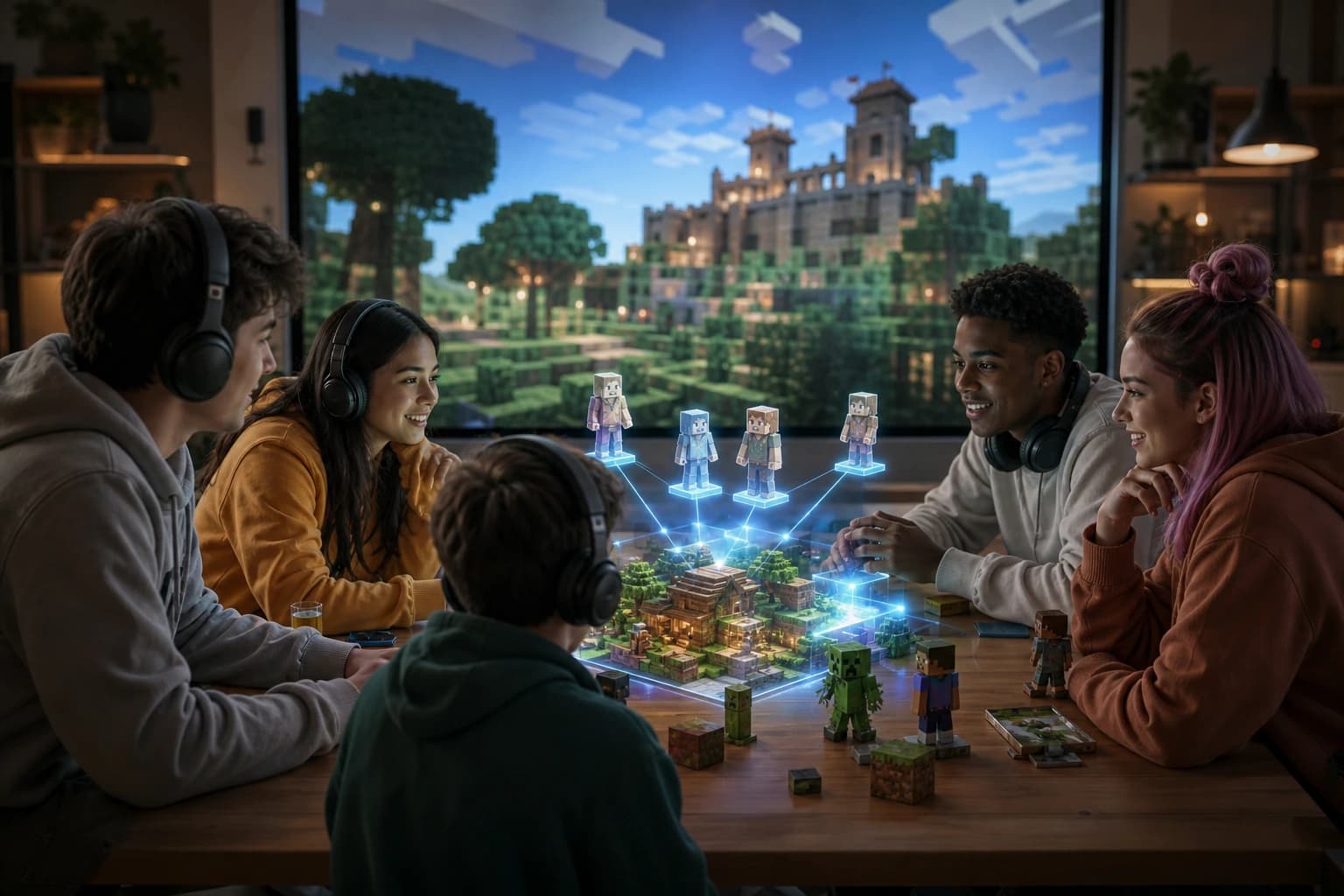
At COYA, we see the same problem across Minecraft Communities: plenty of players are online, but finding people who genuinely fit can still feel harder than locating diamonds on your first night. A huge member count does not guarantee compatible schedules, shared goals, good communication, or a similar attitude toward the game. COYA approaches community discovery differently by matching gamers according to their games, platforms, skill context, age, and playstyle, then placing compatible players in a live room where they can start talking and playing.
The right group can turn an abandoned solo seed into a world you keep building for months. It might introduce you to a dependable survival partner, a redstone expert who understands your contraptions, or a relaxed squad that explores without rushing every objective. This guide explains how to compare Minecraft Communities in 2026, identify active and well-moderated spaces, meet suitable teammates, and create a community where people actually want to stay.
Why the right Minecraft community changes the way you play
Minecraft supports very different ways of playing. One person wants a long-term vanilla world with a shared economy, while another wants competitive PvP every evening. Some players carefully plan megabases; others wander until someone accidentally wakes the Warden. Strong Minecraft Communities align expectations before those differences become frustrating. Edition, platform, language, time zone, age range, availability, voice preferences, skill level, and attitudes toward progression all shape whether a group feels natural.
Compatibility also affects trust. Players are more likely to share resources, collaborate on ambitious builds, and return for future sessions when communication feels comfortable. COYA focuses on this human layer rather than treating every available player as an interchangeable username. Find Teammates Who Actually Fit Your Playstyle is not only a slogan. It describes the difference between joining another crowded channel and meeting someone ready to build, explore, fight, or chill with you.
The main types of Minecraft Communities in 2026
Minecraft Communities serve different purposes, so the best format depends on what you want from the experience. Persistent servers support long-term progression, private worlds create consistency, live social groups make conversation easy, and specialist forums help players exchange knowledge or creations. These formats can overlap, but understanding their strengths saves time and helps you search for compatible people instead of choosing solely by popularity.
SMP communities and multiplayer servers
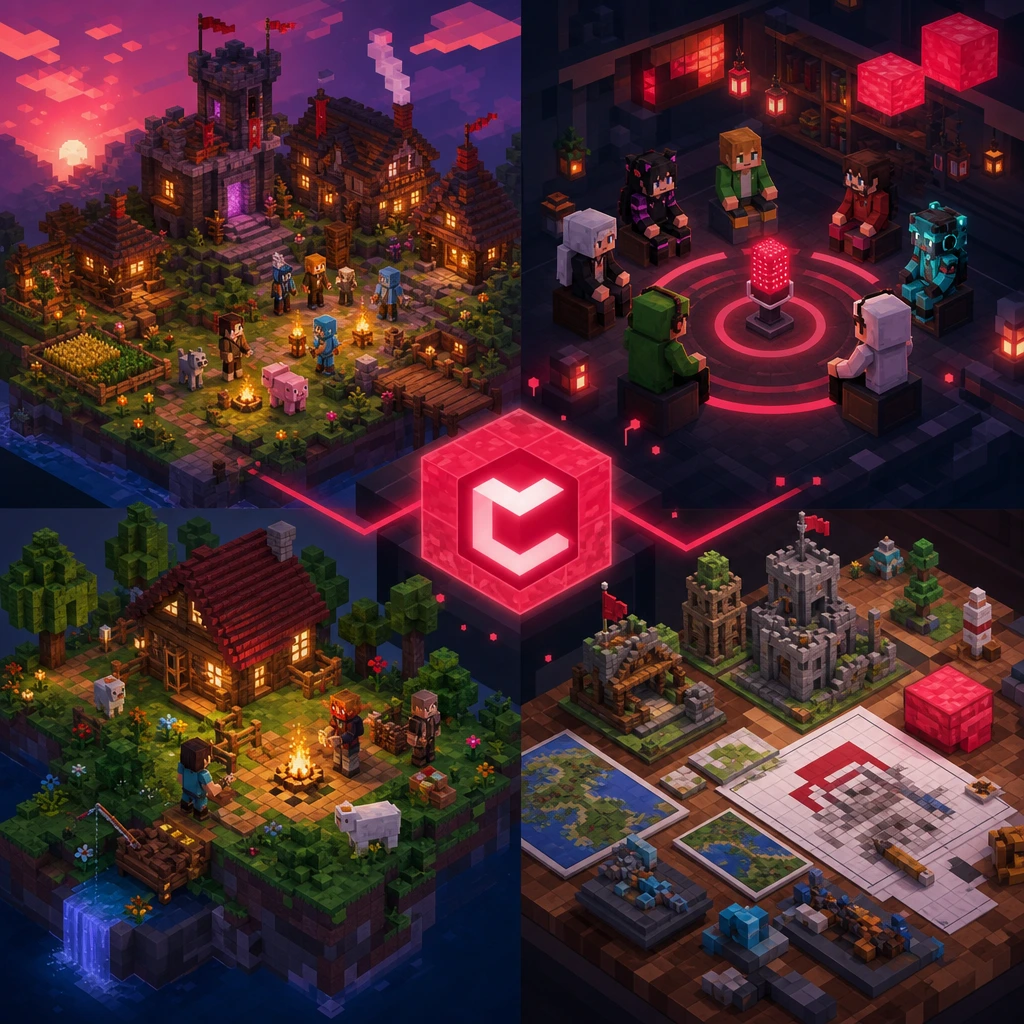
An SMP, or survival multiplayer community, shares a persistent survival world. Members may establish towns, trade resources, operate shops, join factions, defeat bosses, or collaborate on large farms and builds. Some worlds stay close to vanilla mechanics, while others use mods, custom rules, economies, or roleplay. Before joining, check reset schedules, griefing policies, progression speed, PvP rules, and expected weekly activity. COYA can help you meet teammates who want a similar level of commitment before you invest hours in a new base.
Live chat groups and social spaces
Public Discord groups commonly organize text channels, voice chat, events, support, and recruitment in one place. They can be useful for meeting many players, but crowded channels make compatibility difficult to judge. A recruitment post might receive no response or attract people with completely different schedules and goals. COYA reduces that browsing loop by using compatibility signals first, helping matched players move into a live room and decide whether the vibe works through an actual conversation.
Realms and smaller private groups
Private, invitation-based worlds suit players who prefer a consistent circle and greater control over membership. They are often easier to moderate and can support closer friendships because the same people return regularly. The tradeoff is availability: if two members stop playing, the world can quickly feel empty. For small Minecraft Communities, matching reliable players through COYA can help fill specific gaps, such as finding another builder, explorer, technical player, or weekend teammate.
Forums, creator groups, and build-sharing spaces
Topic-based spaces are valuable when you need technical help, map inspiration, mod guidance, skin ideas, build feedback, or collaborators for a defined project. Their searchable discussions can answer detailed questions that disappear quickly in live chat. However, content discovery is not the same as teammate discovery. Use these Minecraft Communities to learn and share, then use COYA when your priority is finding people who can join a session and play alongside you.
What are the best Minecraft Communities to join?
There is no universal top-ranking group. The best Minecraft Communities are the ones that match your edition, platform, region, language, age range, schedule, skill level, and preferred experience. A technically impressive server may still be wrong if its active hours fall during your night or its culture rewards aggressive competition when you prefer relaxed cooperation. Evaluate fit before features, and meaningful participation before headline membership numbers.
Match the community to your Minecraft playstyle
Start by naming what a good session looks like for you. Survival grinders need teammates who enjoy gathering, progression, farms, and long-term worlds. Creative builders benefit from groups that coordinate themes, palettes, plots, and constructive feedback. Redstone engineers need space to test systems without their machines being dismantled. PvP players should look for compatible skill levels, practice formats, and clear rules. Speedrunners need focused sessions, while roleplayers need reliable participants who respect the world’s story.
Modded players should also compare launcher requirements, modpack versions, hardware expectations, and attitudes toward troubleshooting. Casual explorers may care more about friendly conversation and flexible attendance than optimized progression. This is where COYA’s playstyle-based approach becomes practical. Instead of assuming every Minecraft player wants the same experience, COYA helps surface gamers whose preferences and social energy are more likely to fit yours.
Choose activity and group size that fit your vibe
Large public hubs usually offer frequent activity, events, and varied game modes, but individual messages and new members can be overlooked. Mid-sized Minecraft Communities often balance regular activity with recognizable names. Small squads create stronger continuity and easier coordination, although every absence is noticeable. Ask whether you want constant drop-in action, a familiar neighborhood, or three dependable people for scheduled sessions. COYA prioritizes compatibility so you can build a circle rather than disappear into a crowd.
Where to find active Minecraft players and communities
Players discover Minecraft Communities through gaming match services, server directories, official community channels, public chat groups, forums, creator spaces, and referrals from friends. Directories are useful for comparing game modes or server specifications, while forums and creator groups offer deeper topic-based discovery. When the goal is to find compatible people rather than another page of listings, COYA provides a more direct path from player search to live interaction.
Find compatible Minecraft teammates on COYA
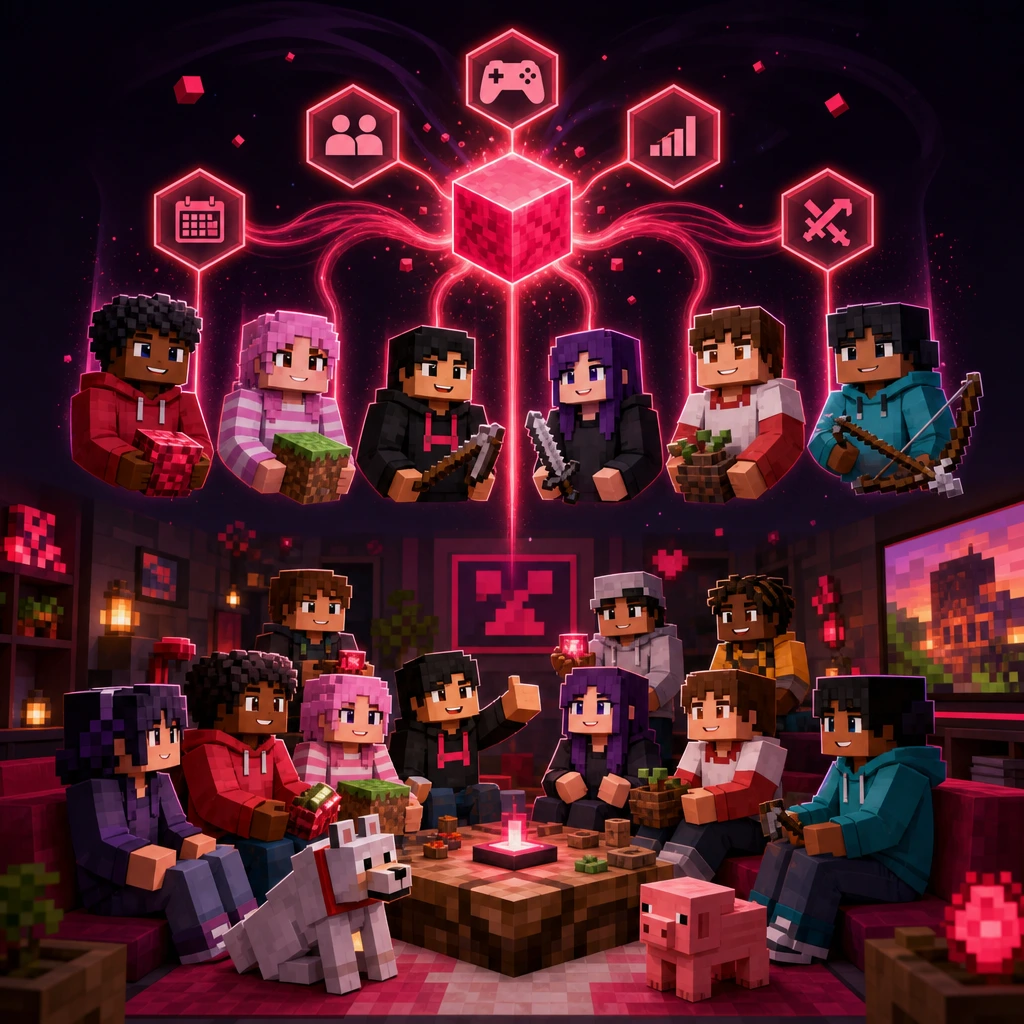
COYA matches gamers using the games they play, their platforms, rank or relevant skill context, age, and playstyle. Those signals matter in Minecraft even without one universal ranked ladder. Skill context might mean beginner, experienced builder, technical player, competitive fighter, modpack veteran, or returning player. Playstyle can separate focused progression from casual exploration, or constant voice chat from quieter cooperation.
After matching, COYA places compatible gamers in a live room so they can connect immediately. That removes a common failure point in Minecraft Communities: posting an introduction, waiting for replies, exchanging several messages, and never entering a world together. A short live conversation helps everyone confirm the edition, session goal, communication style, and available time. If the match feels right, you can start planning the base before the first Creeper rearranges it.
Search by goals, not just popularity
A useful search description is specific enough for the right person to recognize themselves. Include your edition, platform, language, region or time zone, typical session length, voice preference, experience level, and immediate goal. Useful phrases include vanilla survival, modded Minecraft, Bedrock, Java, creative building, PvP practice, beginner-friendly, adult group, weekend sessions, regional time zone, and optional voice chat. Fit produces better sessions than a giant follower total.
A stronger teammate request
Try: “Java survival player, UTC+1, available twice a week, relaxed voice chat, looking for two adults to start a long-term world.” COYA uses this kind of compatibility context to help the right players find each other.
How to tell whether a Minecraft community is safe and well moderated
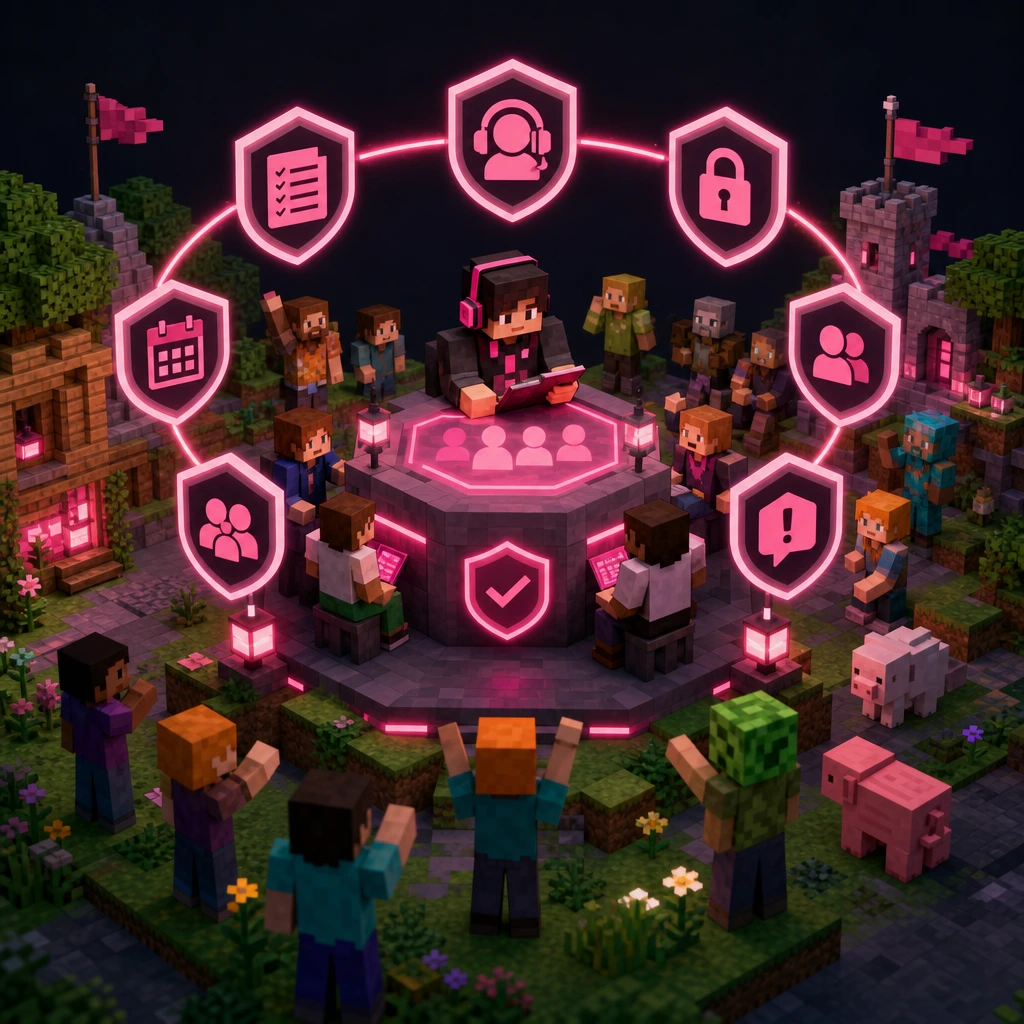
Safety should be checked before you share personal details, download files, or commit time to a world. Healthy Minecraft Communities explain their expectations clearly and enforce them consistently. No service can remove every risk, so players should use privacy controls, protect account information, verify downloads, and leave spaces where harassment or suspicious behavior is ignored.
Check the rules, moderators, privacy, and reporting tools
- Look for visible rules covering harassment, hate speech, griefing, cheating, unwanted contact, scams, and inappropriate content.
- Confirm that moderators are active, identifiable, and reachable through a clear private reporting route.
- Check whether consequences are consistent and whether appeals or conflict-resolution procedures exist.
- Protect personal information and avoid groups that pressure members to reveal locations, account credentials, private photos, or identifying details.
- Treat unexpected downloads, unofficial launchers, payment requests, and shortened links cautiously. Scan files and verify their source.
- Leave if bullying, targeted griefing, threats, or moderator favoritism continue without meaningful action.
Confirm age suitability and inclusivity before joining
Age policies should be explicit. Younger players, adults, parents, and mixed-age groups may need different communication boundaries and moderation standards. Check whether channels, events, and voice spaces are age-appropriate, and avoid assuming that a label alone guarantees safety. Inclusive Minecraft Communities also state how they handle discrimination and accessibility needs. COYA uses age as a compatibility signal, helping players connect within a more relevant social context without replacing personal judgment or sensible privacy practices.
Test whether the community is genuinely active
Member count is less useful than recent participation. Review several days of conversations, recurring events, server uptime, response speed, and the number of different people contributing. Ask a practical onboarding question and see whether anyone answers helpfully. Compare active hours with your time zone, because a global group can appear busy while remaining silent during your sessions. Healthy activity means people are talking, welcoming newcomers, and entering games, not simply occupying a member list.
How to join Minecraft Communities and make real friends
Joining is only the first step. Real friendships usually develop through repeated, low-pressure sessions where players communicate reliably and complete something together. You do not need a dramatic introduction or an elite portfolio of builds. Give people enough relevant information to understand how you play, join one manageable activity, and let trust grow naturally.
Introduce yourself with the details that matter
Share your edition, platform, time zone, preferred modes, experience level, usual availability, communication preference, and the squad you want. For example: “Bedrock player, UTC-5, online weekday evenings, casual survival and exploration, microphone optional, looking for a friendly small group.” These are also the kinds of signals COYA uses to create stronger matches, so players begin with useful context instead of guessing.
Start with one shared goal
Choose a first session that can produce a satisfying result in 60 to 120 minutes. Start a survival base, explore a new seed, reach the Nether, test a modpack, practice combat, map a cave system, or complete one section of a collaborative build. A defined objective removes awkwardness and creates natural conversation. A COYA live room can turn a compatible match into that first session without another unanswered recruitment thread.
Be the teammate other players want to invite back
Communicate when plans change, respect shared builds, ask before taking rare resources, and return borrowed equipment. Give newer players room to learn instead of optimizing every choice for them. Handle deaths, lost gear, and accidental explosions without blaming the squad. Good teammates can disagree without becoming toxic. Across successful זה, reliability and respect usually matter more than perfect mechanics.
How to start and grow your own Minecraft community
Community owners should resist growth for its own sake. Ten compatible members who play regularly can create more energy than a thousand inactive accounts. COYA’s fit-first philosophy applies here too: define exactly who the group serves, help suitable members reach their first game quickly, and build systems that protect the culture as membership grows.
Define who the community is built for
Document the edition, platform, mode, age policy, primary language, region, schedule, skill expectations, modification requirements, and social tone. State whether the world is competitive, roleplay-focused, technical, family-friendly, adult-only, beginner-friendly, or built around relaxed weekend sessions. Precise positioning helps the right players self-select and prevents avoidable conflict. The strongest זה are understandable before someone joins.
Build an onboarding path that gets members playing
Keep onboarding short: a welcome message, essential rules, role or interest selection, an introduction prompt, starter information, and a clearly scheduled activity. Assign a member or moderator to greet newcomers and answer practical questions. Do not bury the server address or event time beneath dozens of channels. COYA is designed around the same lesson: connection becomes meaningful when discovery leads quickly to live gameplay.
Sustain engagement without creating burnout
Use a predictable rhythm rather than filling every day with obligations. Monthly build nights, rotating challenges, seasonal worlds, boss runs, community projects, and member showcases create reasons to return. Collect feedback after major changes and share moderation responsibilities across realistic shifts. Events should support friendships, not become attendance tests. Track returning participants, event turnout, completed projects, and newcomer retention instead of celebrating raw membership alone.
Prevent toxicity before it takes over the server
Set rules before conflict occurs and apply them consistently to established members and newcomers. Train moderators to document incidents, protect reporters, de-escalate disagreements, and use proportionate consequences. Keep reporting private, respond promptly to targeted griefing or harassment, and separate honest mistakes from repeated harmful behavior. Leaders shape זה through what they reward, ignore, and correct. A welcoming culture requires active maintenance.
Your next Minecraft squad should fit the way you play
The most rewarding זה are not automatically the largest or loudest. They are safe enough to build trust, active during your available hours, and aligned with your platform, age range, goals, communication style, and personality. Take time to check moderation and activity, but do not get stuck browsing forever. The point is to enter a world, share an objective, and discover whether playing together feels right.
COYA removes much of that guesswork by matching compatible gamers and placing them in a live room where a real connection can begin. Whether you need one survival partner, a creative build team, a PvP practice squad, or reliable members for a private world, COYA helps you meet gamers who actually match your vibe. Find players. Join games. Play together.
Ready to find your next teammate?
Join COYA and start playing together: https://www.coya.gg/