

League of Legends Beginner Guide 2026: Learn the Rift in Your First 10 Games
This League of Legends Beginner Guide turns an intimidating first match into a practical 2026 learning path. Understand roles, champions, items, objectives, settings, and teamwork, then use COYA to find compatible players who match your experience and playstyle.

This League of Legends Beginner Guide turns an intimidating first match into a practical 2026 learning path. Understand roles, champions, items, objectives, settings, and teamwork, then use COYA to find compatible players who match your experience and playstyle.
At COYA, we know that starting League can feel like joining a conversation where everyone already speaks in pings, cooldowns, and objective timers. This League of Legends Beginner Guide gives you a simpler route into the game: learn one concept at a time, play with patient teammates, and treat your first 10 matches as practice rather than a test. You do not need to memorize every champion, item, or matchup before entering the Rift.
League is easier to learn when the people beside you understand your experience level and goals. COYA matches gamers using factors such as game, platform, rank, age, and playstyle, then places compatible players in a live room so they can play together. That means a beginner can look for a relaxed duo, an ADC or support partner, or a full group that communicates without turning every mistake into drama.
League of Legends in 60 Seconds: What Are You Actually Trying to Do?
League of Legends is a five-versus-five strategy game played on Summoner's Rift. Each team begins in its own base and protects a central structure called the Nexus. Your main objective is to cross the map, destroy defensive structures, and break the enemy Nexus before the other team breaks yours. This League of Legends Beginner Guide focuses on the decisions that directly support that goal.
You control one champion with unique abilities. During the match, you earn gold and experience by defeating minions, champions, and neutral monsters or by helping with objectives. Gold buys items, while experience unlocks and strengthens abilities. Kills can create an advantage, but they are not the final objective. A team with fewer kills can still win through stronger farming, smarter positioning, and better control of turrets and neutral objectives.
The Simple Match Flow: Lane, Objectives, Team Fights, Nexus
Most matches begin with a laning phase. Players farm minions, trade damage, place wards, and look for safe opportunities. As turrets fall, teams move more frequently between lanes and contest Dragons, Rift Herald, and other map objectives. Later, a single team fight can open the path to Baron Nashor, inhibitors, or the Nexus. Compatible COYA teammates make these transitions easier because calls such as group, reset, push, or back off have shared meaning.
The Essential Terms to Learn First
- Champion: the character you control throughout the match.
- Minions: allied and enemy units that travel down lanes in regular waves.
- CS and last hitting: CS tracks defeated minions, while last hitting means landing the finishing attack to receive gold.
- Turret: a defensive structure that attacks nearby enemies and blocks progress through a lane.
- Inhibitor: a base structure that, when destroyed, allows stronger allied minions to spawn temporarily.
- Nexus: the final structure. Destroying it wins the match.
- Recall: channeling a return to base, where you heal and purchase items.
- Gank: an unexpected visit to a lane, usually intended to create a numbers advantage.
- Ward: a vision tool that reveals part of the map for a limited time.
- Ultimate: a champion's signature ability, usually unlocked at level six.
You will learn dozens of other terms naturally, but this vocabulary is enough to understand most basic calls. Keep this League of Legends Beginner Guide open during early bot matches if you need a quick reminder.
How Summoner's Rift, Lanes, and Roles Work
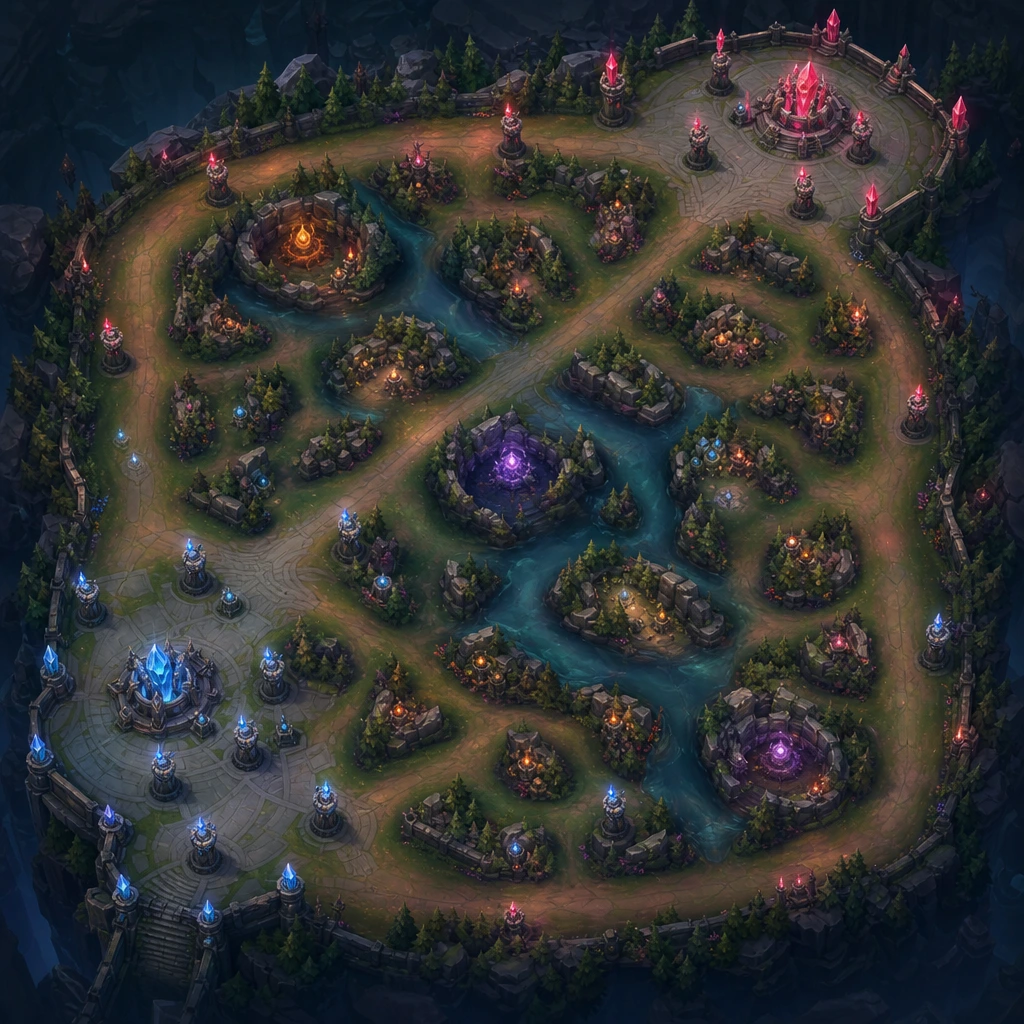
Summoner's Rift contains top, mid, and bottom lanes, with jungle areas between them and a river crossing the center. Each role starts with a typical responsibility, but every player eventually contributes to team fights and objectives. The best beginner role is not automatically the easiest role on a tier list. It is the role whose pace and responsibilities fit how you enjoy playing.
Top Lane: Independent and Durable
Top is relatively isolated during the early game and commonly features fighters or tanks. It can suit patient players who like one-versus-one matchups, wave control, and durable champions. You still need to watch for jungle ganks and know when to join an objective. Through COYA, a new top player can find teammates who communicate clearly about missing enemies, objective timing, and Teleport opportunities.
Jungle: Map Movement and Decision-Making
Junglers defeat neutral camps, move between lanes, use Smite, and help secure major objectives. Jungle offers map-wide influence, but its pathing and decision load give it a steeper initial learning curve. If you choose it, start with a clear route and one simple goal, such as reaching a nearby lane after clearing several camps. A supportive COYA group can explain lane states and reduce the pressure to appear everywhere at once.
Mid Lane: Fast Decisions and Map Impact
Mid is the shortest lane and provides quick access to both sides of the map. Mages often control space from range, while assassins look for bursts of damage and roaming opportunities. Mid suits players who enjoy frequent interaction and proactive map movement. Communication matters because disappearing from mid can affect either side lane.
ADC: Farming, Positioning, and Consistent Damage
The ADC usually plays in bottom lane, commonly as a ranged marksman. The role depends heavily on reliable farming, item completion, and safe positioning. You often deal sustained damage but can be eliminated quickly if you walk too far forward. Finding a compatible support through COYA is especially useful because the pair shares the lane and must coordinate trades, wards, recalls, and engages.
Support: Vision, Protection, and Playmaking
Support is not a passive spectator role. Supports control vision, protect allies, start fights, disrupt enemies, and help the team move safely around objectives. Some are durable engage champions, while others heal, shield, or poke from range. COYA can connect you with an ADC or squad whose communication style fits yours, which makes learning lane partnership much more natural.
Which Role and Beginner Champion Should You Choose?
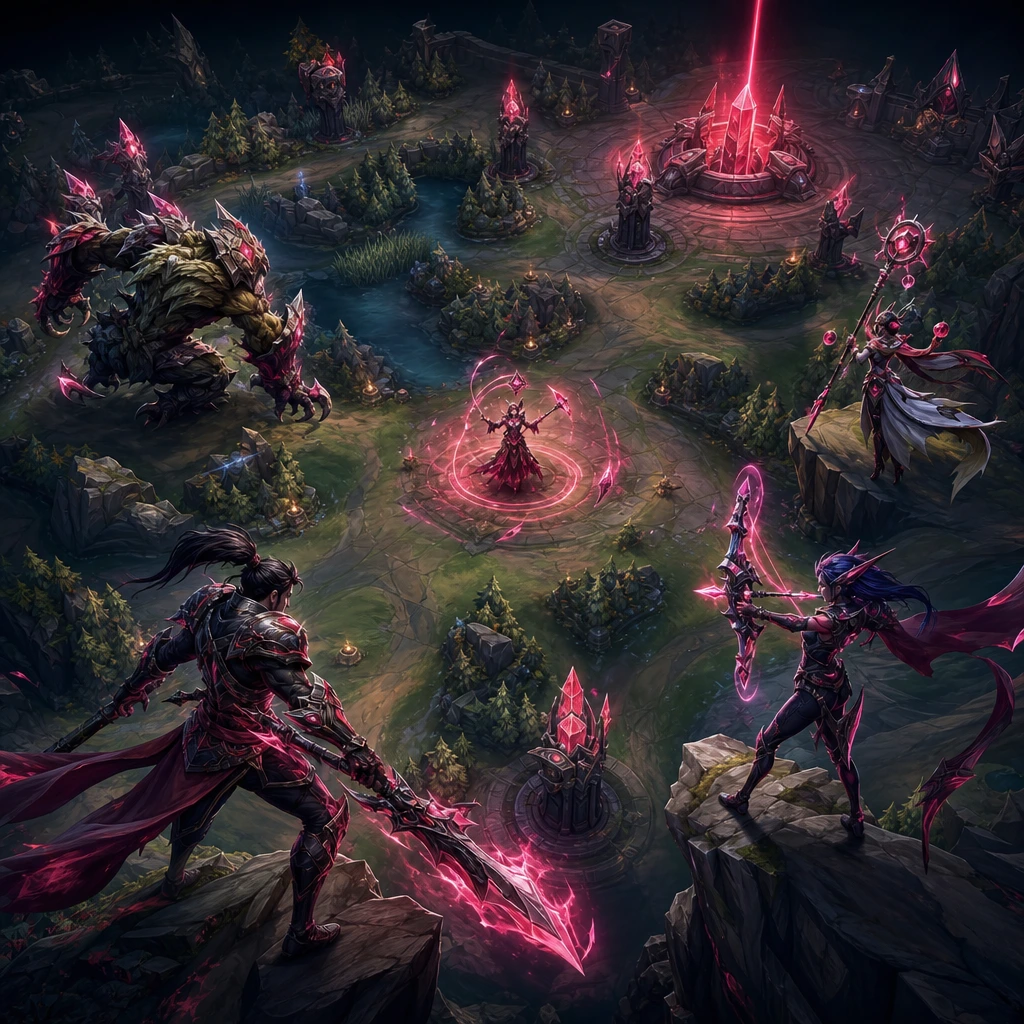
This League of Legends Beginner Guide recommends choosing by playstyle before worrying about what is strongest in a particular patch. Pick top if you value independence and durable fights, jungle if you enjoy map decisions, mid if you want central influence, ADC if you like ranged damage and farming, or support if you prefer vision, protection, and playmaking.
Beginner Champion Types by Role and Playstyle
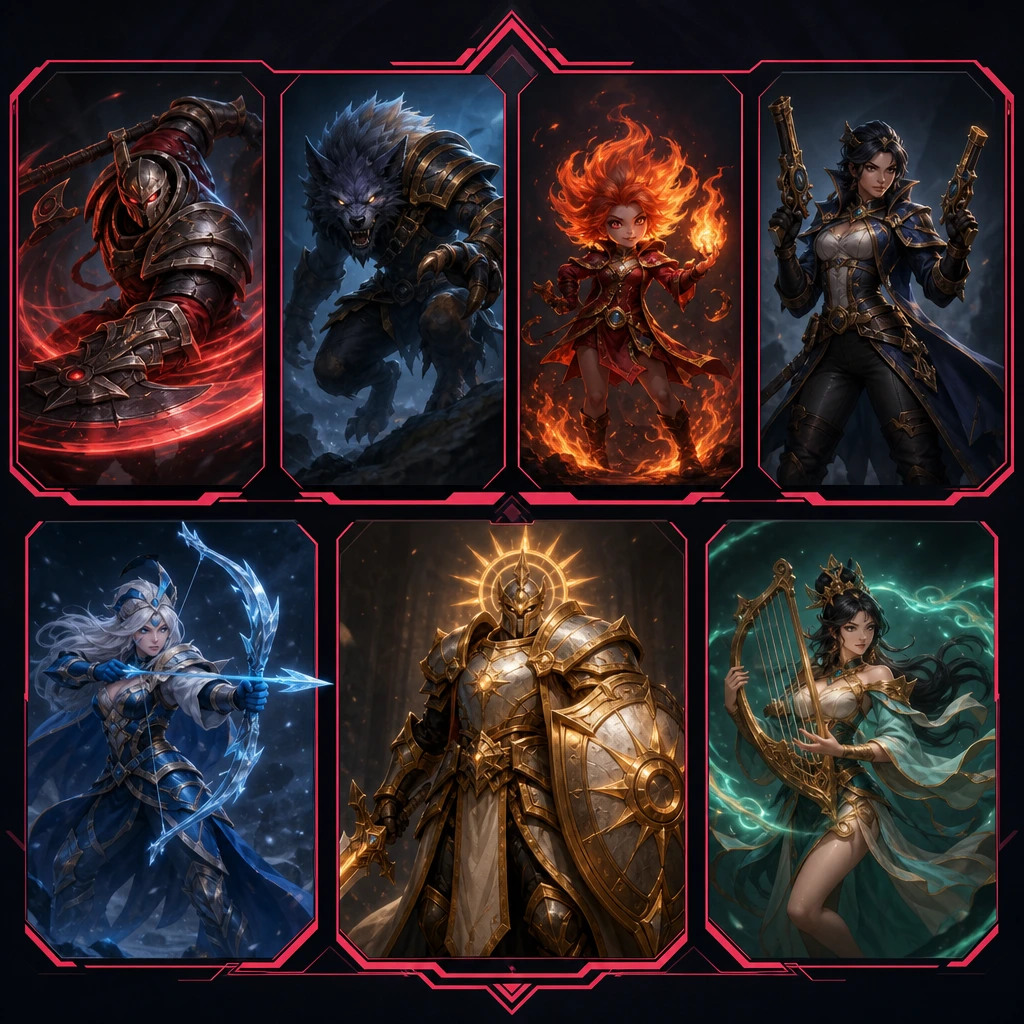
- Top, Garen: low mechanical difficulty, durable fighter style, teaches trading, patience, and timing.
- Jungle, Warwick: low-to-moderate difficulty, sustain and pursuit style, teaches clearing, ganking, and objective awareness.
- Mid, Annie: low mechanical difficulty, burst mage style, teaches ability range, farming, and combo timing.
- ADC, Miss Fortune: low-to-moderate difficulty, ranged team-fight damage, teaches positioning and target selection.
- ADC, Ashe: low-to-moderate difficulty, utility marksman style, teaches kiting, vision support, and initiating fights.
- Support, Leona: moderate difficulty, durable engage style, teaches commitment, target choice, and coordination.
- Support, Sona: low mechanical difficulty, protective team style, teaches spacing, mana use, and ally awareness.
Champion balance, recommended builds, and availability may change during 2026, so confirm current information in the game client. These examples are useful because their core plans are readable, not because they guarantee easy wins.
Why One or Two Champions Are Enough at First
A small champion pool removes unnecessary variables. When abilities and ranges become familiar, you can spend more attention on minions, the minimap, enemies, and team calls. Play one main champion and keep one backup for the same role. Tell the people you meet through COYA which champion and role you are learning so expectations remain aligned from the queue.
A Quick Role and Playstyle Self-Test
- I like surviving long fights and handling my own lane: try top.
- I enjoy planning routes and helping different teammates: try jungle.
- I want quick combat and access to the whole map: try mid.
- I like dealing reliable ranged damage: try ADC.
- I prefer protecting allies or starting coordinated fights: try support.
Your answers also describe what to request on COYA. A relaxed farming ADC may want a patient protective support, while an aggressive mid player may prefer a communicative jungler. This playstyle context is more useful than simply asking for any teammate.
Set Up League Before Your First Real Match
Good settings do not replace practice, but poor settings can hide important information. Use the Practice Tool or a low-pressure bot match to test your controls before joining a normal game. The aim is comfort and consistency, not copying a professional configuration.
Controls, Camera, Interface, and Performance Settings
- Try locked, semi-locked, and unlocked camera modes, then choose the option that lets you move confidently while checking nearby action.
- Test quick cast on your main champion so abilities activate predictably.
- Increase minimap size if icons are difficult to notice.
- Enable clear health bars and use color settings that improve visual distinction.
- Learn attack move only after basic movement feels comfortable.
- Keep useful sound cues audible, especially pings and ability effects.
- Prioritize stable frame rate and connection quality over decorative visual settings.
Runes, Summoner Spells, and Item Builds Without the Overload
Runes provide bonuses selected before the match. Summoner spells are additional abilities, such as a short movement escape or a return-oriented map tool, chosen separately from your champion kit. Items are purchased during the game with gold. For your first matches, current recommended setups are reasonable training wheels. Once the basics feel familiar, ask an experienced COYA teammate why a defensive, movement, or damage choice fits the current match.
Communication Tools and Healthy Team Etiquette
Pings can communicate danger, movement, missing enemies, or an intended objective without requiring a long message. Use chat for brief, useful information and mute communication that becomes distracting or hostile. Declare your role, mention that you are learning, and ask for one clear suggestion at a time. COYA is built around meeting gamers who match your vibe, making respectful communication part of the match rather than an afterthought.
A Better Beginner Lobby
COYA matches players by games, platforms, rank, age, and playstyle before placing them in a live room. For a new League player, that can mean finding patient teammates who want to learn, communicate, and play at a compatible pace.
The Core Skills to Practice in Every Match
The most useful League of Legends Beginner Guide is one you can apply during play. Instead of tracking twenty goals, choose one or two fundamentals per match. A consistent COYA duo or squad can help because you spend less energy adapting to completely different communication styles every game.
Last Hitting, Minion Waves, and CS
Landing the final hit on a minion earns gold, and the number of minions you secure contributes to your CS. Practice waiting until a minion is low enough before attacking. Avoid automatically hitting every minion, because pushing the wave farther from your turret can expose you to ganks. Enter Practice Tool, farm for 10 minutes without an opponent, record your result, and try to improve it gradually rather than chasing an advanced benchmark immediately.
Trading, Positioning, and Knowing When to Back Off
A trade is a short exchange of damage. Before fighting, compare health, mana or energy, ability cooldowns, levels, nearby minions, and the number of players present. An opponent with a large allied minion wave may be stronger than expected. Backing away is often the correct play when key abilities are unavailable or an enemy disappears from the map. Tell your COYA teammates when you cannot follow instead of entering a losing fight silently.
Map Awareness, Wards, and Vision Control
Glance at the minimap regularly, especially after securing a minion or when there is a pause in lane. Place trinket wards in routes enemies are likely to use, not simply wherever the cursor happens to be. If opponents are missing, avoid entering unlit jungle areas alone. Coordinate vision with your squad before major objectives. A useful exercise from this League of Legends Beginner Guide is to connect every friendly ping with one quick minimap check.
Dragon, Rift Herald, Baron Nashor, and Turret Priorities
Dragons provide team benefits, Rift Herald can help pressure structures, and Baron Nashor gives a powerful temporary advantage that helps teams push. Turrets create gold and map access when destroyed. Objectives usually produce more reliable progress than chasing one low-health enemy across the jungle. Do not begin or contest a major objective alone unless you clearly understand the risk. Shared COYA calls make it easier to decide whether to fight, trade an objective, or reset.
Team Fighting Without Getting Instantly Deleted
Tanks and engage supports usually operate near the front, while marksmen and many mages need safer positions behind allies. Assassins often wait for an opening rather than entering first. Attack a reachable target instead of crossing the entire fight for a fragile opponent. Track major enemy abilities, remain within support range, and enter with your team. If four allies are retreating, your solo highlight play is unlikely to improve the situation.
Your First 10 League of Legends Games: A Match-by-Match Roadmap
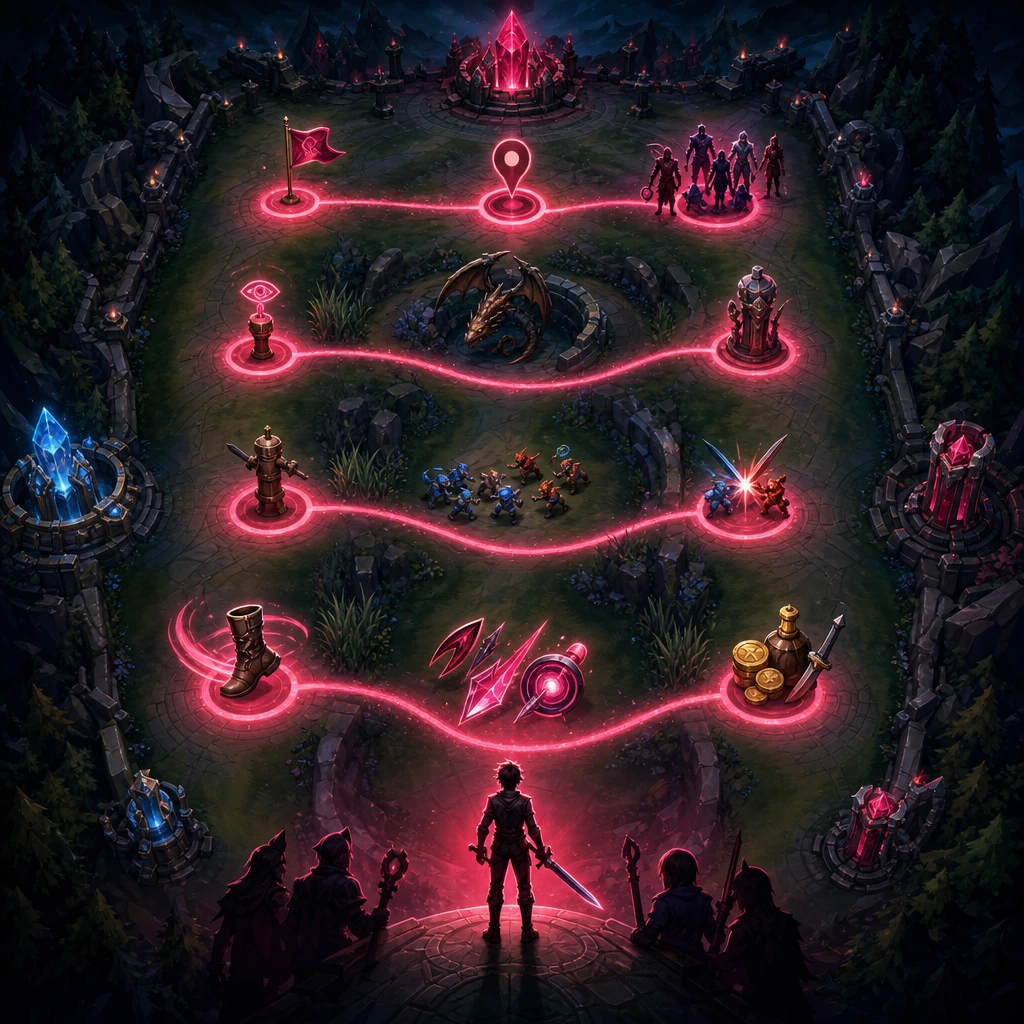
Your first 10 games are not a placement exam. Measure whether you completed the learning goal, not whether the Nexus victory screen appeared. The following League of Legends Beginner Guide roadmap deliberately repeats concepts so they become comfortable before new responsibilities are added.
Games 1 and 2: Movement, Abilities, Shopping, and Recall
Complete the tutorials and begin with bot games if the controls are unfamiliar. Focus on moving without accidentally walking into enemies, casting every ability, recalling safely, and purchasing recommended items. Locate your lane, base, river, jungle entrances, and objective areas. Ignore complex combos for now. By the end of game two, you should understand how to leave base, reach lane, earn gold, shop, and return.
Games 3 and 4: Stay in One Role and Learn One Champion
Repeat the same champion and role. Learn what each ability does, the usual order for leveling abilities, and one basic combo or trading pattern. Notice your attack and ability ranges. Playing with the same compatible COYA teammate reduces variables and lets both of you establish simple calls such as engage, ward, recall, or wait.
Games 5 and 6: Farming, Trading, and Lane Safety
Set a personal CS goal based on your previous match, not a high-level standard. Look for short trades when an enemy uses an important ability or steps too close. Place a ward before pushing far from your turret and recall when you can purchase a meaningful component. Review whether your deaths came from missing vision, low health, poor positioning, or fighting while outnumbered.
Games 7 and 8: Objectives, Pings, and Map Awareness
Now track Dragons and turrets while continuing your lane fundamentals. Ping when your lane opponent disappears and respond when teammates signal danger. Before walking toward an objective, check health, resources, nearby teammates, and visible enemies. With a COYA squad, turn calls into shared actions: push the wave, place vision, group, secure the objective, and reset together.
Games 9 and 10: Team Fights and a Simple Post-Game Review
Focus on role-appropriate positioning. Ask whether you entered too early, stood too far forward, or used a major ability on the wrong target. After each match, review one death and one successful play. Choose only one improvement goal for the next queue. Supportive feedback from COYA teammates should describe an action you can change, not assign blame for the result.
A useful first 10 games teaches you how to notice the map, your champion, and your teammates. Winning is welcome, but familiarity is the real early progression.
— COYA
What Beginners Should Buy and How Account Progression Works
In-match gold and account progression are separate systems. Gold earned during a match buys temporary items for that match only. Account progression can provide access to champions, modes, and cosmetic options over time. Exact systems may change during 2026, so use current in-client information instead of relying on an old requirement or currency total.
Starting Items, Boots, Components, and Completed Items
Starting items support the opening lane or jungle clear. Components provide smaller statistics and build into completed items with stronger effects. Boots improve movement and may offer defensive or offensive benefits depending on the upgrade. Follow current recommended purchases while learning, but begin asking why each item works. A compatible COYA teammate can explain why one match calls for survivability while another rewards more damage.
Champion Unlocks, Modes, and the Path Toward Ranked
Unlock champions that interest you, but avoid spending all your learning time switching between unrelated kits. Become comfortable with one main role, a secondary role, and a small champion pool. Try available modes according to current account access. Ranked becomes more useful when controls, farming, objectives, and basic team fighting no longer consume all your attention. There is no prize for rushing there.
Common Beginner Mistakes and the Better Habit for Each One
- Chasing kills across dark territory: take the nearby turret, wave, vision, or objective instead.
- Fighting outnumbered: count visible allies and enemies before committing.
- Ignoring minions: collect safe waves because consistent gold supports every later fight.
- Forgetting wards: connect warding with predictable moments such as pushing or preparing an objective.
- Copying builds without context: use recommendations, then learn whether you need damage, defense, or utility.
- Changing champions every game: repeat one or two picks until their controls become automatic.
- Blaming teammates: review one decision you controlled and communicate the next plan clearly.
- Entering ranked too early: build stable habits in lower-pressure games before adding competitive pressure.
This League of Legends Beginner Guide treats mistakes as information. If you died to a gank, the lesson may be to ward earlier, track the jungler, or manage the wave differently. Playing with constructive COYA teammates makes that review more useful because feedback can focus on the next decision instead of the previous result.
Is League of Legends Too Difficult for New Players?
League has a large champion roster, many items, unfamiliar terminology, and constant decisions, so the initial learning load is real. You do not need to absorb it simultaneously. Learn controls, then one champion, then one role, then broader map decisions. Friendly teammates reduce the social pressure and give unfamiliar calls context while you build confidence.
How Long Does It Take to Learn League?
There is no reliable universal timeline. Basic movement and shopping may feel comfortable after several sessions, while matchup knowledge and map reading develop across many more games. Competitive confidence depends on experience, goals, and previous strategy-game familiarity. Short, consistent sessions with players who match your pace on COYA are usually more productive than one exhausting marathon.
Make Learning League Better With the Right Teammates
A technically complete League of Legends Beginner Guide cannot replace the value of learning beside people who communicate well. Beginners benefit from teammates who respect their current rank, explain calls briefly, and share similar goals. Schedule, preferred roles, competitiveness, and communication style all affect whether a group actually works.
COYA helps players worldwide find compatible gamers based on their games, platforms, rank, age, and playstyle. After matching, players enter a live room and can start playing together immediately. You can look for a regular duo, a lane partner, a patient player willing to explain objectives, or a full squad preparing for ranked without making the process feel like an interview.
How COYA Helps You Find Players Who Match Your Vibe
The goal is simple: Find Teammates Who Actually Fit Your Playstyle. If you are learning ADC, you can seek a support who prefers calm communication. If you are practicing jungle, you can meet laners who respond to objective calls without expecting perfection. If your priority is relaxed normal games after work or school, say so. COYA makes compatibility the starting point instead of leaving it to chance.

What to Put in Your COYA Profile or Group Request
- Region and typical play times, including your time zone.
- Preferred role and one acceptable secondary role.
- Current experience, such as first matches, returning player, normal-game learner, or ranked preparation.
- The one or two champions you are currently practicing.
- Communication preference, including voice, pings, chat, or a mixture.
- Typical session length and whether you prefer one match or a longer group session.
- Current learning goal, such as CS, jungle pathing, objective calls, or team-fight positioning.
- Desired mood, such as relaxed, focused, social, patient, or competitive.
A useful request could say: New support player, learning Leona and Sona, available for two normal games in the evening, comfortable with pings or friendly voice chat, looking for a patient ADC focused on lane fundamentals. That gives COYA and potential teammates more meaningful compatibility signals than a generic request for players.
Your Beginner Checklist Before You Queue
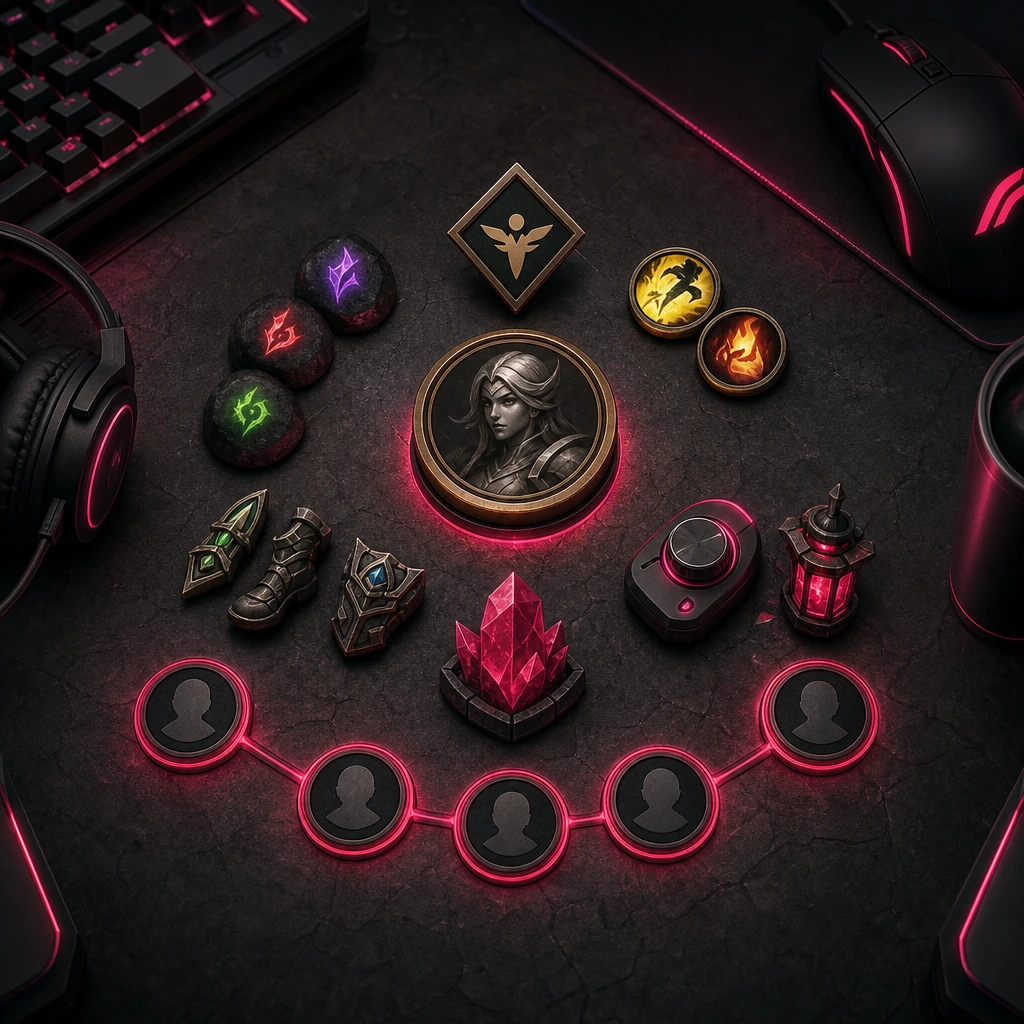
- Choose one role and one familiar champion.
- Confirm current runes, summoner spells, and starting items.
- Check camera, minimap, sound, and performance settings.
- Set one learning goal for the match.
- Use wards and respond to missing-enemy or danger pings.
- Check ally positions before starting a fight or objective.
- Communicate respectfully and mute distractions when necessary.
- Queue with a compatible COYA teammate when you want a more consistent learning environment.
Start Small, Learn Together, and Enjoy the Rift
The best result from this League of Legends Beginner Guide is not instant mastery. It is knowing what to practice next. Repeat a small champion pool, improve one skill per game, and let map awareness develop in layers. COYA brings the community side into that process by helping you meet gamers who share your pace, communication style, and reasons for playing.
Your first games will include missed minions, late recalls, confusing fights, and objectives you notice a few seconds too late. That is normal. With clear goals and compatible people beside you, each queue becomes easier to understand and more enjoyable to play. Your next squad is waiting on COYA, ready to learn, communicate, and run it back.
Ready to Find Your Next Teammate?
Join COYA and start playing together: https://www.coya.gg/