

How to Get Better at League of Legends in 2026: A 30-Day Plan
Improving at League takes more than spamming solo queue or copying the latest build. This guide provides a measurable 30-day plan for mechanics, macro, VOD review, communication, and finding compatible teammates through COYA.
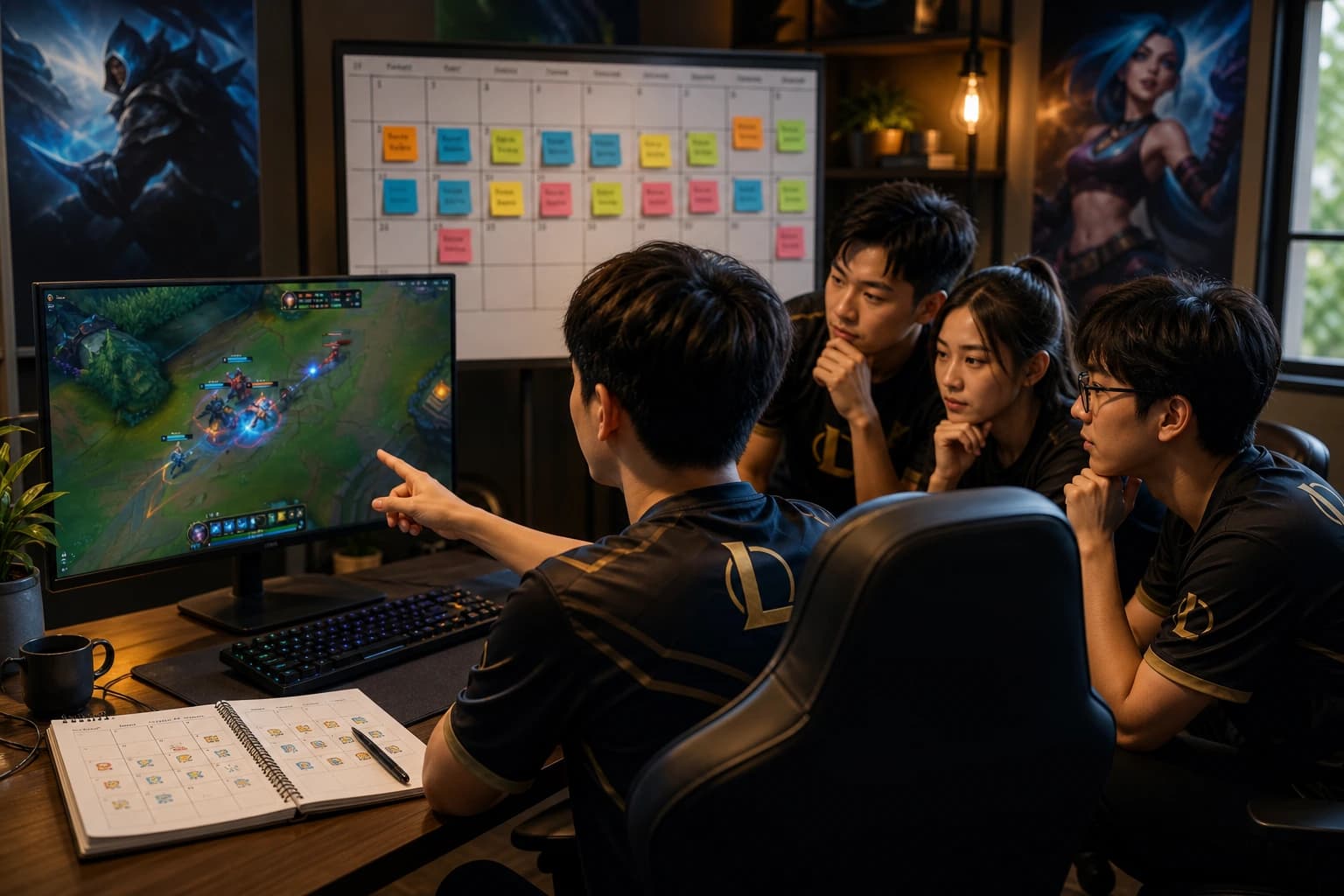
Improving at League takes more than spamming solo queue or copying the latest build. This guide provides a measurable 30-day plan for mechanics, macro, VOD review, communication, and finding compatible teammates through COYA.
At COYA, we see How to Get Better at League of Legends as a combination of focused practice, honest review, and playing with people who support your goals. Spamming solo queue can increase your match count, but it does not automatically improve your decisions. You need a small champion pool, measurable habits, controlled sessions, and teammates who communicate without turning every mistake into drama.
This guide explains How to Get Better at League of Legends through a practical 30-day system. It works across patches because it focuses on farming, wave control, map awareness, positioning, macro, communication, and tilt management rather than temporary tier lists. Adapt the benchmarks to your role, current rank, schedule, and preferred playstyle.
Start With a Clear League Improvement Baseline
Before changing your gameplay, record where you are now. Write down your rank, main role, two most-played champions, weekly practice time, preferred style, and biggest recurring problem. From COYA’s player-matching perspective, How to Get Better at League of Legends becomes easier when both your goals and ideal teammates are clearly defined. A patient scaling player may need different practice partners from someone who prefers early skirmishes and proactive invades.
Choose Three Metrics You Can Track
Choose only three metrics for your first month. Useful options include CS per minute, deaths before 15 minutes, vision score, objective participation, roam success, or unspent gold before recalls. How to Get Better at League of Legends depends on tracking numbers that reflect your role. A support should not chase an ADC farming benchmark, while a jungler should care more about efficient clears, objective setup, and useful lane pressure.
Complete a Quick Self-Assessment
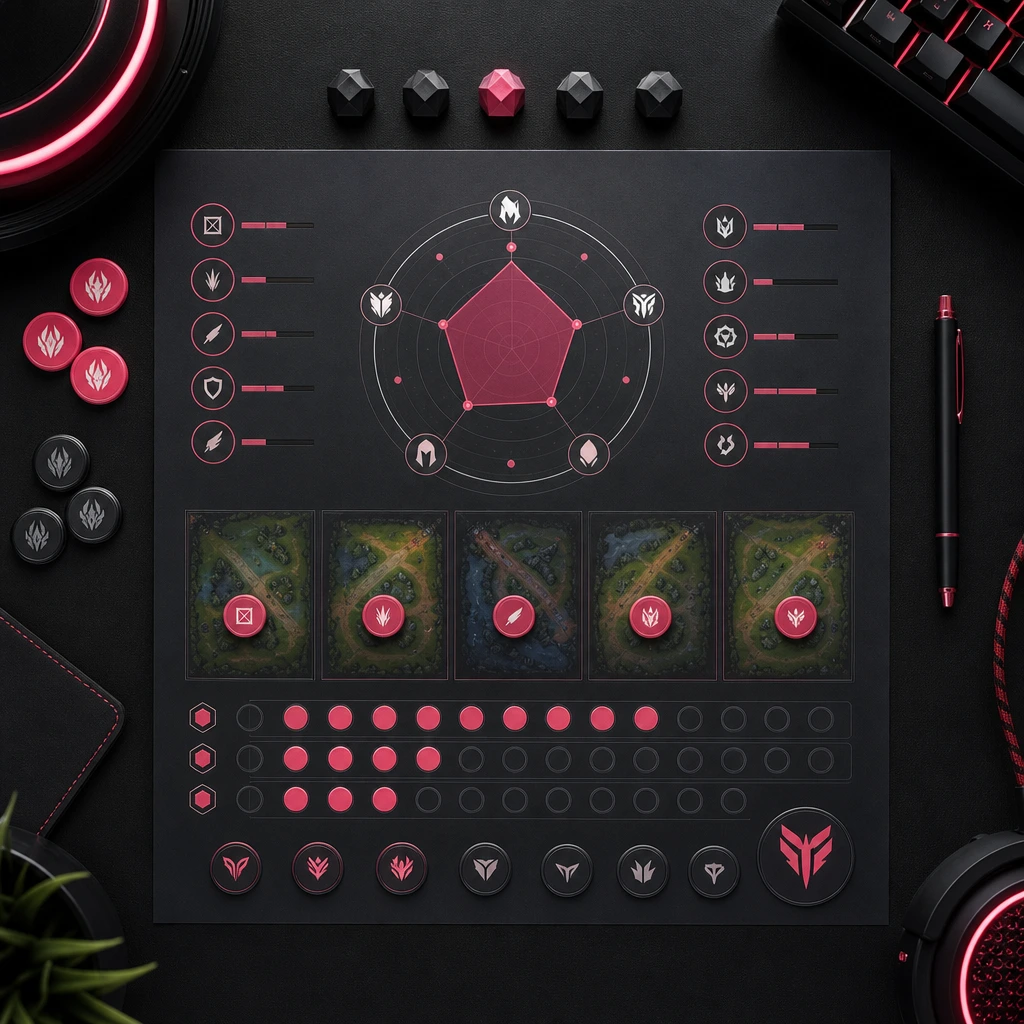
Score mechanics, laning, map awareness, macro, communication, positioning, and tilt management from one to five. Add one sentence of evidence for every score. For example, “Map awareness: 2, because I missed three support roams in my last five games.” Save the scorecard and repeat it on Day 30. This turns How to Get Better at League of Legends into a visible process instead of a vague feeling.
Master the LoL Fundamentals That Stay Relevant Across Patches
Patch changes matter, but reliable fundamentals survive balance updates. If you are learning How to Get Better at League of Legends, prioritize repeatable decisions over constantly switching champions because a new pick has a slightly higher win rate.
Farming, Trading, and Wave Management
Practice last-hitting without using unnecessary abilities, then add controlled trading around enemy cooldowns. Ask what the wave should do before you touch it. Freeze when safety or denial matters, slow-push when you need a large wave for a dive or rotation, and crash before recalling when possible. For many developing laners, roughly 5 to 7 CS per minute is a practical starting range in real matches; experienced carries may target 7 to 9 when game conditions permit. These are references, not universal pass marks. How to Get Better at League of Legends means understanding why CS was missed, not farming side waves while your team loses a decisive objective.
Map Awareness, Vision, and Objective Control
Check the minimap between last-hits, ability casts, and movement commands. Track missing opponents, likely jungle paths, major cooldowns, and which lanes have priority. Place wards for a specific question, such as whether an enemy is entering river, rather than dropping them automatically. Start preparing for neutral objectives before they spawn by fixing waves, spending gold, and establishing safe vision. How to Get Better at League of Legends often comes down to arriving 20 seconds early instead of reacting five seconds late.
Win Conditions, Positioning, and Better Macro
Identify who can realistically carry the next fight. Protect shutdowns, avoid forcing low-value skirmishes, and decide whether grouping or side-laning creates more pressure. Position according to your champion’s job: engage, peel, flank, poke, or sustained damage. If your strongest teammate needs front-line protection, chasing the enemy support may lose the fight. How to Get Better at League of Legends requires choosing the useful play, not the flashiest one.
Use a Simple Decision Filter
Before a fight, ask: What objective are we contesting? Which cooldowns matter? Who is our win condition? What happens if we lose? Four quick answers can prevent a full-send fight with no strategic value.
Build a Champion Pool Around Your Role and Playstyle
Choose one main role, two or three reliable champions, and one backup pick. Ideally, your pool should include comfort, reasonable matchup coverage, and champions you genuinely enjoy. How to Get Better at League of Legends is much harder when every match begins with unfamiliar ranges, combos, damage limits, and lane patterns. COYA matches gamers using factors including game, platform, rank, age, and playstyle, so your champion identity can also help you connect with players whose approach complements yours.
Should You One-Trick a Champion?
One-tricking accelerates familiarity because fewer mental resources go into basic execution. You can focus on wave states, matchups, and macro. However, bans, autofill, balance changes, and boredom make a small pool safer for many players. For How to Get Better at League of Legends over the long term, use one primary champion frequently while keeping one or two competent alternatives.
Adapt the Plan to Your Rank and Available Time
New players should learn champion abilities, map objectives, and basic lane assignments. Lower-ranked players usually gain more from reducing early deaths, improving farming, and noticing the minimap. Intermediate players can emphasize tempo, wave-objective links, matchup planning, and coordinated calls. With 30 minutes, warm up and play one focused match. With 60, add a short review. With 120, play two or three quality games with breaks. How to Get Better at League of Legends should fit your real schedule, whether you are 16, 42, studying, working, or balancing both.
Improve Your Mechanics With Deliberate Drills
Mechanical skill improves fastest when the task is specific. Instead of “practice mechanics,” train last-hitting, combo timing, spacing, camera movement, kiting, skill-shot accuracy, or reaction to a known cue. COYA encourages players to bring those focused goals into live games with compatible teammates who understand what they are practicing. That makes How to Get Better at League of Legends more structured and less random.
A 15-Minute Practice Tool Routine
- Minutes 0 to 5: last-hit without starting items or unnecessary abilities. Record missed uncontested minions and aim to reduce that number weekly.
- Minutes 5 to 9: perform your champion’s core trading or burst sequence ten times. Pass when at least eight attempts are clean and correctly ordered.
- Minutes 9 to 12: alternate movement, attack commands, camera repositioning, and target selection without standing still after an action.
- Minutes 12 to 15: rehearse one role-specific skill, such as kiting, jungle clear sequencing, support roam timing, or top-lane wave control.
Keep the conditions consistent so your results can be compared. For How to Get Better at League of Legends, a repeatable warm-up is more useful than an impressive drill you perform once.
Turn Each Match Into One Focused Practice Session
Select one focus before queueing: ward timing, spacing, recall quality, tracking the jungler, or avoiding deaths with a stacked wave. Do not try to repair seven weaknesses at once. Tell regular teammates your focus so they can give useful feedback. How to Get Better at League of Legends becomes manageable when each game has one clear learning objective.
Why the Right Teammates Can Help You Improve Faster
League is a team game, even when you enter the queue alone. Compatible teammates make role coordination, feedback, communication, and consistent practice more productive. They can notice blind spots, challenge risky calls, and help you test specific setups. For COYA, זה is also about building a healthier learning environment where players can improve without gaming alone.
Find League Players Who Match Your Rank and Vibe on COYA
COYA matches you with compatible gamers based on your games, platforms, rank, age, and playstyle, then places you in a live room so you can play together instantly. That is useful when you want a duo who communicates calmly, a coordinated five-stack, or practice partners with similar goals and availability. If זה is your goal, COYA helps you Find Teammates Who Actually Fit Your Playstyle instead of leaving team chemistry to chance.

Build Communication Habits That Win More Games
Use concise pings and short calls for objectives, missing opponents, summoner spells, and important cooldowns. Share information before assigning blame. “Their engage is down” gives your team an option; “Why did you do that?” gives them noise. Repeated games with well-matched COYA teammates build trust and make calls easier to interpret. זה includes learning when to speak, what matters, and when the team needs quiet focus.
Review Your VODs Without Overcomplicating It
You do not need to review every second. COYA’s practical method focuses on decisive moments and repeat patterns. When studying זה, the goal is to identify one change you can apply in the next match, not produce a documentary about your last loss.
The Five-Moment VOD Review Checklist
- First death: What information warned you, and what safer option existed?
- First missed recall: Could you have crashed the wave or spent gold earlier?
- First lost objective: Were waves, vision, health, and item purchases prepared in time?
- Highest-impact teamfight: Did your target selection and positioning match your role?
- Final decisive mistake: Was it mechanical, informational, emotional, or a macro decision?
Pause before the outcome becomes obvious and predict the best play using only information available at that moment. This prevents hindsight from distorting the review. For זה, compare your actual choice with two realistic alternatives, then select one adjustment for the next game.
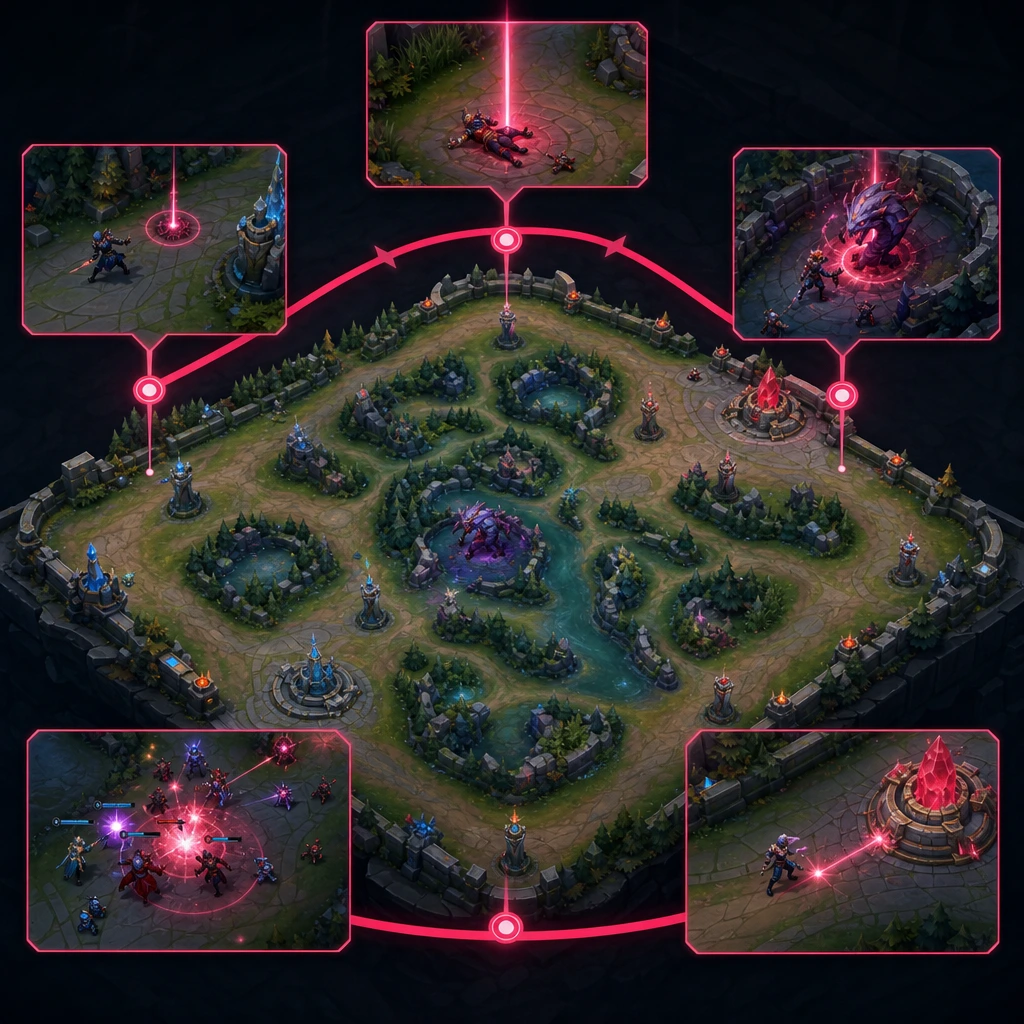
Track Patterns Across Five Matches
Create a table with champion, role, result, CS, deaths, vision score, objective participation, key mistake, tilt level from one to five, and next-game focus. Review five matches together rather than overreacting to one stomp. If three losses contain the same early death pattern, you have a useful training target. Discuss repeated patterns with trusted COYA teammates. זה is easier when feedback comes from people who understand your habits and intentions.
Climb Ranked More Consistently Without Burning Out
Ranked progress is noisy. You can make a good decision and still lose, or play poorly and get carried. Judge sessions by decision quality as well as LP. זה requires enough emotional stability to notice mistakes without treating every defeat as proof that improvement is impossible. A supportive COYA squad can also make the grind more social and less frustrating.
Use a Stop-Loss Rule for Tilt Management
Pause ranked after two difficult losses, especially when you notice rushed queues, blame, reckless fights, or autopilot. Stand up, hydrate, and take at least 15 minutes away from the match. Identify the trigger and return only when you can name a clear focus. זה does not mean forcing another game while your decision-making is already cooked.
Prioritize Quality Games Over Endless Queueing
Sleep, hydration, posture, and breaks affect reaction time and patience. Keep ranked blocks short enough to maintain attention, and review between blocks instead of instantly requeueing. For many players, two focused games teach more than six tired ones. זה is a consistency project, not a challenge to play until sunrise.
A Measurable 30-Day League of Legends Improvement Plan
The following plan combines mechanics, macro, replay review, and coordinated games. Adjust the number of matches to your schedule, but keep the sequence. The core of זה is repeating focused actions long enough to measure whether they work.
Week 1: Establish Fundamentals and Baselines
- Day 1: complete the self-assessment and choose three role-relevant metrics.
- Day 2: select one main role, two core champions, and one backup pick.
- Days 3 and 4: complete the 15-minute CS and combo routine before one or two matches.
- Days 5 and 6: check the minimap between every safe farming action and record early deaths.
- Day 7: review one match with the five-moment checklist and set next week’s focus.
Week 1 is diagnostic. Do not panic if the numbers are messy. You are creating a trustworthy baseline for זה, not trying to become a different player in seven days.
Week 2: Train Mechanics and Laning
Warm up before every session. Focus each match on one laning skill: trading around cooldowns, controlling the wave, recalling after a crash, or reducing avoidable deaths before 15 minutes. Schedule at least one coordinated session with a compatible player found through COYA. Explain your focus before the match and ask for one useful observation afterward.
Week 3: Improve Macro and Team Coordination
Shift attention toward objective setup, rotations, vision timing, and win conditions. Before each neutral objective, ask whether your team has spent gold, fixed nearby waves, and established safe entrances. Play with the same compatible COYA teammates when possible, using concise calls and agreed role priorities. This is where זה moves from individual execution into coordinated decision-making.
Week 4: Test, Review, and Adjust
Repeat your original self-assessment and review five recent matches. Compare averages rather than isolated highs. Identify one remaining weakness and build the next 30-day cycle around it. If CS improved but objective preparation stayed late, maintain the farming habit while shifting your main attention to recalls, wave timing, and early rotations.
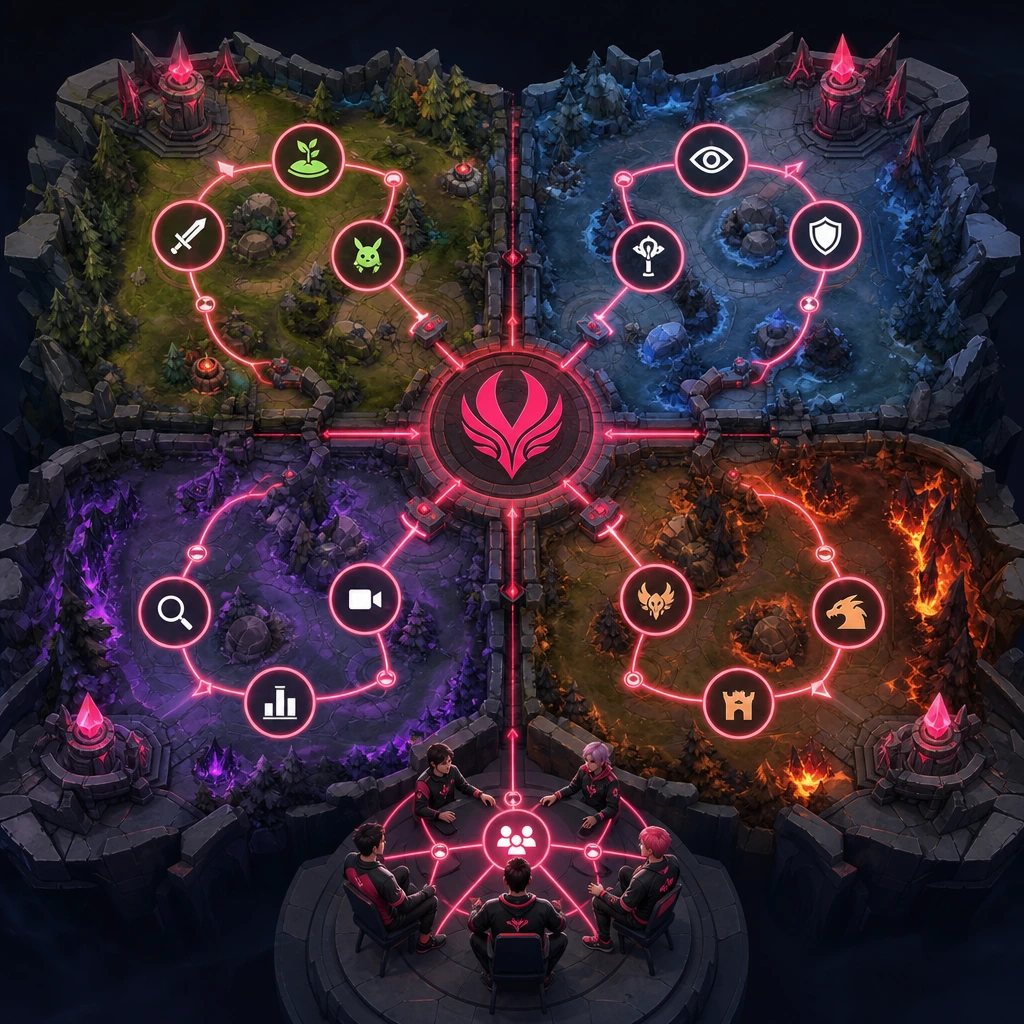
Day 30 Progress Benchmarks
Look for fewer avoidable early deaths, steadier CS, earlier objective preparation, clearer calls, better positioning, and lower tilt scores. Also check whether you can explain your decisions more clearly than on Day 1. זה has no guaranteed rank deadline, but improved habits should create more consistent opportunities to win.
The strongest progress signal is not one huge win streak. It is making better decisions more often, even when the match gets messy.
— COYA
Your Next Squad Is Waiting
Focused drills, honest VOD review, and controlled ranked sessions give you a reliable answer to זה. The right people make that process easier to sustain. COYA helps you meet gamers who match your rank, schedule, age, platform, goals, and vibe, so practice can feel coordinated, social, and worth repeating. Find players. Join games. Play together.
Find Your Next Teammate
Join COYA and start playing together: https://www.coya.gg/