
Get Better at Fortnite: 9 Habits That Work in 2026
Hundreds of hours in and still getting beamed? You're not grinding wrong — you're grinding dumb. Here are 9 habits that actually stack wins in 2026.
Tired of putting in the hours and still getting beamed by players who seem to read the lobby like a script? You're not grinding wrong — you're just not grinding smart.
The gap between where you are and where you want to be in Fortnite almost never comes down to raw hours. It comes down to whether those hours are building real habits or just feeding a playtime counter. This guide breaks down nine concrete habits that compound fast, and one of them — the most underrated skill accelerator in the game — has nothing to do with mechanics at all.
Getting Better at Fortnite Is a System, Not a Grind
Most players who plateau have the same story: hundreds of hours in, decent aim, and still dying in top 20 to players who just seem to know more. The common fix is "play more." The real fix is play differently.
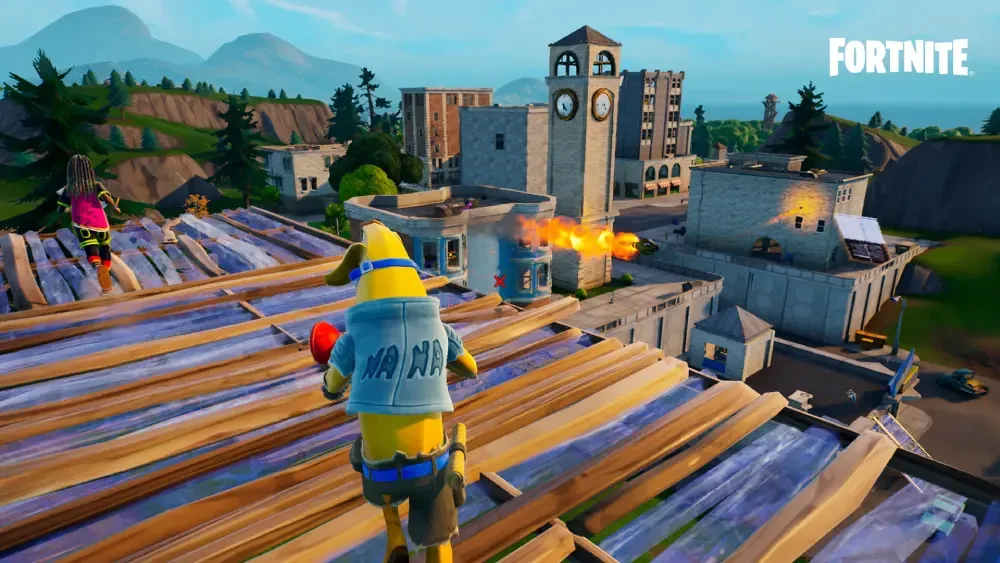
Intentional habits stack. Fix your positioning this week, tighten your loadout logic next week, add a reliable squad the week after, and your improvement curve stops looking flat and starts looking steep. One focused session beats three lazy ones every time.
The Core Answer: What Actually Separates Better Players
The honest breakdown is this: consistent winners in Fortnite are not always the best aimers. They are the players who take the best fights, survive to the final circles more often, and make fewer catastrophic decisions per match.
Three things drive almost all of the skill gap between average and good Fortnite players. First, mechanical consistency: aim, editing (in builds), and cover management. Second, game sense: knowing when to push, when to rotate, and where to be before a fight starts. Third, teammate quality: playing with people who communicate and match your playstyle.
That third one gets treated like a nice-to-have. It is not. It might be the highest-leverage improvement action you can take today, and the sections below explain exactly why. The habits underneath break each area down into something you can actually act on before your next session.
Lock In Your Mechanics First
Mechanics are your floor. You cannot out-game-sense a lobby if you miss five straight shots at medium range. The goal here is not perfection — it is consistency at your current rank, then pushing that ceiling upward deliberately.
These are the mechanical skills with the highest return for most players who want to improve at Fortnite fast.
Aim Training: The Right Way to Use Creative Mode
Playing pubs alone does not build aim. In a real match, you take maybe ten to twenty meaningful shots per game. That volume is not enough to develop muscle memory.
Creative mode aim training fills that gap, but only if you do it right. The mistake most players make is loading up a map once a week and grinding for an hour. Short daily sessions — even ten to fifteen minutes — build muscle memory faster than occasional long ones because repetition spaced out over days sticks better than repetition crammed into one sitting.
What to train: tracking courses (following a moving target smoothly), flick drills (snapping to a stationary target quickly), and 1v1 box fight maps that force both mechanics under pressure. Moving target courses stress tracking. Box fights stress aim-while-moving, which is closer to what real fights demand.
When is your aim "good enough" to shift focus? When you stop losing fights at your preferred range against opponents at your rank level. That is the signal to start investing more into game sense instead.
Editing and Building Under Pressure
In builds mode, your editing speed is a combat multiplier. A slow edit in a box fight hands your opponent a free shot. The fix is not to edit faster in real games — it is to build the muscle memory in creative edit courses with zero consequences, so the motion is automatic when the pressure hits.
Practice edit resets specifically: place a wall, edit it, reset it, repeat. The reset is where most players slow down under pressure.
In Zero Build, editing is off the table, but the mechanical ceiling is still real. Cover and mantle movement become your main tools. Using natural structures, rocks, and terrain to control your exposure angle while repositioning is its own learnable skill. Players who master cover movement in Zero Build are the equivalent of fast editors in builds mode: they simply take fewer unnecessary shots.
Game Sense Is the Real Skill Ceiling
Here is what separates a good aimer from a player who wins consistently: game sense. You can track a moving target perfectly and still finish 15th because you took a fight you were never going to win.
Game sense covers everything that happens before the crosshair even moves. Storm awareness, positioning, fight selection, loot pathing. These are learnable, and they have a higher ceiling than most players realise.
Positioning Before the Fight Starts
Proactive positioning means deciding where you want to be before any fight happens — not reacting to where a fight finds you.
Landing spots matter here. A named location that gives solid loot but has three natural third-party angles is a trap for players who have not thought about it. A quieter zone that lets you fully kit out and rotate with first-ring advantage might be the smarter drop even if it feels less exciting.
Take high ground in named locations before committing to a fight below. If you are on high ground above a fight and watching two squads trading, you have the choice of when to push. If you are in the valley, you have no choice at all. In Zero Build, height still wins — a player elevated on a hill or structure forces opponents into unfavourable upward shooting angles. That advantage exists in both modes.
When to Fight and When to Rotate
This is the decision most players get wrong most often, and it costs them more placements than bad aim ever will.
The framework is simple: a fight is worth taking when you have the resource advantage and the ring is on your side. If you have full shields, a full loadout, and the next circle is directly behind your opponent, push hard. If you are at half-shields, running low on mats, and the circle is pulling you away from the fight, the correct play is almost always to let it go.
Say you are top 20 and you hear a fight erupting to your east. Your instinct is to push and farm kills. The actual calculation: are you full-kitted? Is the circle pulling east? Do you have height? If any two of those are "no," rotating is almost certainly the higher expected-value decision. Taking a bad fight at top 20 is not aggressive play — it is a placement mistake dressed up as confidence.
Your Loadout Is a Decision, Not a Default
Many players grab the highest-rarity item they see and call it a loadout. That approach ignores role coverage, which is what a functional loadout actually provides.
A balanced Fortnite loadout covers three needs: close range, medium range, and healing. The fourth and fifth slots are where personal playstyle comes in.
In Zero Build, a shotgun is close to mandatory. Without builds to force opponents into predictable positions, close-range fights happen constantly, and a shotgun is the tool for them. Pair it with an assault rifle or SMG for medium-range pressure, and at minimum two healing slots, and you have a working foundation.
In builds mode, a reliable shotgun-plus-AR combination with a healing slot and a utility slot (sniper, mobility item, or extra heals depending on playstyle) covers most fight scenarios.
The weapon archetype matters more than the specific item. Chasing a rare assault rifle over a common-but-functional one because the number is bigger is how players end up under-kitted when they need to push. Know what role each slot serves and fill those roles with what the lobby gives you.
The Fastest Way to Improve: Play With People Who Push You
This is the habit most improvement guides skip entirely, and it is probably the one that will move your rank faster than any aim trainer.
Solo-queuing into random lobbies limits your growth in a specific way: there is no feedback loop. Your random duo has no idea what mode you prefer, what your rank is, what your playstyle is, or even what language you speak. Coordination is impossible under those conditions. And without coordination, every good habit you are building in isolation collapses under the pressure of a real squad fight.
Playing with consistently compatible teammates changes that. Communication teaches game sense passively — you start to understand fight timing, rotation priorities, and resource management through the conversation that happens during a match. That is information you cannot get from solo games.
Random fills are a dice roll. Playing with the right squad is a choice.
This is exactly where COYA becomes the move. On coya.gg, you set up a Gamer Passport with your Fortnite mode (Zero Build or builds), your rank tier, your region, and your language. Then you browse Fortnite Game Matching rooms and check your Compatibility % with each one before joining. A Zero Build player from Brazil, playing in Portuguese, at a similar rank level, will see a high fit score with a room built for Zero Build ranked in the same region. A builds player from a different timezone on a different language? Low match score, visible before anyone commits. No guessing. No wasted games.
Why Random Teammates Are Actively Holding You Back
Picture this: you drop Tilted, your duo lands somewhere completely different without saying a word, gets eliminated in sixty seconds, and now you are playing a 1v2 with no shields and a floor loot pistol. You did not lose that fight because of aim. You lost it because there was no team.
That situation happens constantly in random queue because there is no shared context between players. The in-game squad finder has no way to tell you whether the person joining your lobby speaks your language, plays your mode, or is even in your ranked tier. You find out after the drop.
COYA's Compatibility % replaces that guesswork entirely. You see exactly how well you line up with a Game Matching room before you click join — rank, mode, region, language, playstyle, all factored in. The worst Delta Force op or Fortnite ranked game you have ever had was almost certainly a coordination failure, not a skill gap.
How to Find the Right Duo or Squad on COYA
The practical path is short. Create your Gamer Passport on coya.gg with your Fortnite mode, rank, and region. Open the Fortnite Game Matching rooms and check your compatibility reading with each active room. Join a high-percentage room and you are already coordinating via voice chat inside the room before the match loads.
From "I need a duo" to "I am in a match with a player who actually plays my mode and speaks my language" in minutes. No posting in forums. No waiting for replies. Check out the Fortnite Game Matching rooms on COYA and see what your options look like right now.
Mental Game: Tilt Is a Skill Issue Too
Most guides stop at mechanics and strategy. Tilt — the mental state where a bad run leads to worse decisions leads to another bad run — kills more ranked sessions than bad aim ever does.
The practical fix is simple: set a hard session rule. Three losses in a row means a thirty-minute break, no exceptions. This sounds basic until you realise how many of your worst losing streaks happened because you kept queuing in a frustrated state where your positioning decisions went emotional instead of logical.
After each loss, identify one specific thing you did differently from the right play. Not ten things. One. "I took that fight with 50 shields and mats running out." That single note keeps reflection useful rather than demoralising.
Playing with a consistent, communicative squad from COYA reduces tilt significantly because most of the truly frustrating Fortnite moments — the ones that make you want to close the game — come from coordination failures, not from being outplayed. When you are with people who are on the same page from the start, those chaos-spiral moments happen far less.
Putting It All Together: Your Weekly Improvement Routine
The habits above work best as a system, not a checklist. Here is what a realistic minimum effective dose looks like for a player with limited time.
Before each session: ten to fifteen minutes in a creative aim course. Not as a warmup ritual, but as deliberate muscle memory work. Moving target drills, a few box fights, done.
During ranked sessions: pick one thing to focus on per session. Positioning only. Or loadout management only. Trying to fix everything at once is how you fix nothing. Rotate your focus across sessions across the week.
At least some of your sessions should be with a compatible squad instead of solo queue. Not every game — but enough that the feedback loop of real communication is part of your regular practice. The improvement compounds when you have someone to talk through fights with in real time.
This is the core idea: intentional habits stack fast. Two weeks of focused sessions with a reliable squad and a deliberate practice structure will move your rank more than two months of casual solo grinding.
Create your Gamer Passport on coya.gg, set your Fortnite mode and rank, and open or join a Game Matching room with a high Compatibility % tonight. The single highest-leverage improvement action you can take right now is not another aim course — it is playing your next ranked game with a squad that actually communicates and actually fits.
Frequently Asked Questions
How long does it take to get good at Fortnite?
Most players see a noticeable jump in performance within two to four weeks of intentional practice, not casual grinding. The fastest improvements come from short daily aim sessions in creative mode, reviewing your positioning decisions after matches, and playing with consistent teammates who match your mode and playstyle. Random solo queue slows this down because there is no coordination feedback loop. With the right habits running in parallel, improvement is faster than most players expect.
What is the best way to practice Fortnite to actually improve?
Split your practice between creative aim courses and real matches with a specific focus for each session. Short daily aim sessions build muscle memory faster than long occasional ones. In matches, pick one area to work on per session: positioning, loadout discipline, or fight selection. Trying to improve everything at once usually improves nothing. Playing with a reliable squad also accelerates progress because communication teaches game sense passively during every match.
Is Zero Build easier to improve at than regular Fortnite?
Zero Build removes the building and editing skill ceiling, which makes it more accessible for players who want to focus on aim and positioning first. However, it has its own ceiling: cover usage, movement, and engagement angle management become more punishing with no structures to fall back on. Neither mode is objectively easier to master, but Zero Build has a faster initial learning curve for new or returning players. Both are worth taking seriously as full competitive modes.
Where can I find good Fortnite teammates to play ranked with?
COYA (coya.gg) is the fastest way to go from looking to actually in a match. Create your Gamer Passport with your Fortnite mode, rank, region, and language. Browse Fortnite Game Matching rooms and check your Compatibility % with each one before joining. A high percentage means the room matches your mode, region, rank tier, and language preferences — so there is no guesswork about whether the squad will work. Voice chat inside the room means coordination starts immediately, before the first match loads.
Why do I keep losing gunfights even though my aim feels fine?
Aim is only part of the fight outcome. The bigger factors are usually taking fights at the wrong range for your loadout, entering fights with depleted shields or low materials, and not controlling the high ground or cover angle before engaging. If your aim feels solid but you keep dying, the problem is almost always fight selection or positioning, not mechanical skill. Reviewing where fights start — not just how they end — is the fastest way to diagnose this.
Is the in-game squad finder good enough for finding Fortnite duos?
The in-game finder has no compatibility signal. You have no way to know if the person joining your lobby plays your mode, speaks your language, or is anywhere near your rank tier. You are matching with complete strangers with zero shared context. COYA's Compatibility % system calculates how closely you align with a specific Game Matching room before you join, based on your full Gamer Passport: mode, rank, region, language, playstyle. It removes the guesswork entirely and replaces it with a number you can actually act on.
How do I stop getting tilted after losing in Fortnite?
Set a hard session rule: three losses in a row means a thirty-minute break. Most tilt-spiral losses happen when emotion overrides decision-making and you keep queuing in a degraded mental state. After each loss, identify one specific thing you would do differently — not ten things. One. This keeps reflection useful rather than demoralising. Playing with a communicative squad you trust also reduces tilt significantly, because the vast majority of the most frustrating Fortnite moments are teammate coordination failures, not mechanical skill gaps.
What should my Fortnite loadout look like in Zero Build?
A balanced Zero Build loadout almost always covers: a shotgun for close range, an assault rifle or SMG for medium range, and at least two healing slots. The fifth slot is flexible depending on playstyle: a sniper for open-map situations, a mobility item for aggressive rotations, or extra heals for a more conservative approach. The guiding principle is role coverage, not rarity chasing. Know what each slot is for and fill those roles with what the match gives you.